The foreign quota in Thai condominiums: how it works and how to check it
Foreigners can own a condominium apartment in Thailand freehold, in their own name, as long as the foreign share of the building stays within 49% of the total unit area. Here is how that share is counted, who confirms it and how to check it before you pay a deposit.
The foreign quota is the share of a Thai condominium that foreigners may own freehold: up to 49% of the total area of all units in the building, not 49% of the number of units. If the quota is still open when your purchase is registered, the title deed is issued in your own name; if it is full, the Land Office will not register a foreign freehold transfer.
Legal status as of 24 October 2026. This is general information, not legal advice. The rules below come from the Condominium Act, official Thai government pages and the Bank of Thailand. Ask a lawyer licensed in Thailand to check your contract.
What the foreign quota is
Thai law does not, as a rule, let foreigners own land. A condominium apartment is the main exception. Section 19 of the Condominium Act lets a foreigner own a unit if they fall into one of several groups, such as permanent residence holders, people residing under the investment promotion law and, most relevant to overseas buyers, people who bring the purchase money into Thailand in foreign currency or pay it from a non-resident baht account or a foreign currency account held in Thailand.
Section 19 bis then sets the ceiling. All the units held by foreigners in one condominium, added together, may not exceed 49% of the total area of all units. The rest of the area is held by Thai owners. This is what agents and developers call the “foreign quota”, and a unit bought within it is called “foreign freehold”.
The quota is a limit on the building, not on you. There is no cap on how many units one foreign buyer can own, as long as the building stays within the 49%.
How the quota is calculated
Three details decide how it works in practice.
It is counted by area. The law measures the space of the units, not the number of units. Simple summaries often shorten this to “490 units out of 1,000”, which is only true if every unit is the same size. In a building where foreign buyers prefer studios and Thai buyers prefer larger apartments, more than half of the units can be foreign owned. The reverse is also true: if foreign buyers take the large corner apartments, the quota fills with fewer units.
It is counted per registered condominium. The ratio is tied to the condominium as registered with the Land Office. A project with several buildings may be registered as one condominium or as several, and the quota is counted for each registration. Ask how the project is registered.
It is checked at transfer, not at reservation. As we read the Act and the government portal, the Land Office checks the foreign share when ownership is transferred, using a letter from the condominium juristic person on the current foreign ratio, and registers the transfer only if the foreign share stays within the limit. A reservation or a sale and purchase agreement should not use up quota in law, but ask a lawyer to confirm this for your contract. What protects you before handover is the developer’s own allocation record and the wording of your contract.
Who confirms quota availability
In a building that is already finished and registered, the condominium juristic person (the owners’ body that runs the building) keeps the register of owners. The Thai government portal describes a letter from this body confirming the foreign ownership ratio, which goes to the Land Office with the transfer documents.
In a new development, the developer is the seller of every unit until handover. The developer tracks which units are sold to foreign buyers and how much area that uses. Before handover there is no independent register you can check yourself, so the developer’s written confirmation is what you rely on.
How to check the foreign quota, step by step
- Ask which ownership form the unit is offered under. Foreign freehold and leasehold are often priced and contracted differently. Ask in writing whether your specific unit is allocated to the foreign quota.
- Ask how much foreign quota remains. For a resale, ask the seller to get the juristic person’s letter on the current foreign ratio. For a new development, ask the developer for the remaining foreign quota area for your building or registration.
- Check the size of your unit against what is left. A large apartment needs more quota area than a studio. If the remaining quota is small, ask whether it covers your unit.
- Plan the money transfer. For the foreign currency route under section 19, the purchase price has to arrive from abroad in foreign currency, and you need bank paperwork that proves it: the FET form, which banks have traditionally issued for transfers of about US$50,000 or more, or a credit advice or bank letter for smaller amounts. Tell your bank the purpose of the payment before you send anything, and ask which document it will issue. Our how to buy guide covers the order of payments.
- Read the contract clause on quota. The next section lists what it should say.
What to get in writing before you reserve
Before you pay a reservation deposit on a new development, ask for these points in the reservation form or the sale and purchase agreement:
- that the unit is sold to you as foreign freehold and counted in the foreign quota;
- the unit number and its area, as these determine how much quota it uses;
- what happens if the foreign quota is not available at handover: a refund of what you paid, a switch to a registered lease, or a choice between the two, and within what time;
- that you will transfer the money from abroad in foreign currency, and who keeps the bank documents;
- the expected transfer date and the documents the developer will provide to the Land Office.
A lawyer licensed in Thailand should read the contract before you sign. Foreign buyers do this as a matter of course.
When the quota is full
If the foreign quota is used up, the Land Office will not register another foreign freehold transfer in that condominium. You still have options:
- Buy from a foreign owner. A resale from one foreigner to another should not change the foreign share, so it can usually go ahead in a building that is otherwise full. The Land Office still checks it at transfer.
- Wait. Quota frees up when a foreign owner sells to a Thai buyer.
- Take a lease. A registered lease is a different legal right from freehold: you hold the right to use the unit for a fixed term, registered at the Land Office, rather than the title itself. Many developments offer it to foreign buyers once the quota is gone. Read the term and the renewal clause carefully.
The law also covers units that pass to a foreigner other than by purchase, for example by inheritance. A foreign heir who does not meet the section 19 conditions, or whose registration would take the building over the 49% limit, generally has to sell the unit within one year of acquiring it. An heir outside the qualifying groups generally also has to notify the Land Office in writing within 60 days. How these deadlines apply to a particular heir, including one who could qualify through the foreign currency route, is a question for a lawyer.
Proposals to change the limit (as of 24 October 2026)
In June 2024 the Bangkok Post reported that the Prime Minister backed raising the foreign share in condominiums from 49% to 75%, and that foreign voting rights in the owners’ body would stay at 49%. The cabinet had approved only a study of the idea. It was a proposal, not a change of the law.
As of 24 October 2026 the limit in the Condominium Act is still 49%, and we have found no amendment that changes it. We do not try to predict whether the proposal will become law. If it does, we will update this guide with the date and the text of the change. Until then, decide on the basis of the law as it stands.
Foreign quota at The Astra Samui
The Astra Samui has 237 residences in 3 buildings (A, B and C). Ownership: freehold; foreign buyers purchase freehold within the foreign quota. Under Thai law, the foreign quota is up to 49% of the total unit area in a condominium. Foreign freehold: the unit title deed is issued in the buyer’s own name.
If you prefer a lease, leasehold is also available. Leasehold: a registered 30-year lease. Renewal is not guaranteed.
We do not publish the remaining foreign quota on this page, because it changes with every sale and we have not yet had it confirmed in writing. Ask us for the current figure for the unit you are interested in. Varsovia Estate is the sales agent for The Astra Samui, and we will get the confirmation from the developer in writing before you reserve.
You can filter the apartments by type and see the prices, which start from THB 3,687,000 (about €98,000, NBP average rate of 23 October 2026). For other questions buyers ask about the project, read The Astra Samui: questions to ask before you buy. If you would rather talk it through, book a call with our team.
Questions and answers
Is the 49% foreign quota counted by number of units or by floor area?
By area. The Condominium Act caps the units held by foreigners at 49% of the total area of all units in the condominium, so a building with many small foreign owned studios can reach the limit with fewer than half of its units.
Who confirms that foreign quota is still available?
Before the transfer is registered, the Land Office needs to know how much of the building is already foreign owned. In an existing building this is the condominium juristic person, which issues a letter on the foreign ratio. In a new development the developer keeps the record until handover.
What happens if the foreign quota is full?
The Land Office should not register a foreign freehold transfer above the limit. You can wait for quota to free up, buy a unit already owned by a foreigner, which should keep the ratio unchanged, or take a registered lease instead of freehold where one is offered.
Has Thailand raised the foreign quota to 75%?
Not as of 24 October 2026. In 2024 the cabinet ordered a study of raising it to 75%, but we have found no amendment to the Condominium Act since then. The limit in the Act is still 49%.
Sources
Primary sources used in this article, with the date we last checked each one.
- Condominium Act B.E. 2522 (1979) as amended, Thai text, Office of the Council of State (accessed 23 October 2026)
- Department of Lands, Thailand (accessed 23 October 2026)
- Ownership of real estate by foreigners in Thailand: requesting ownership of a condominium unit, Thailand.go.th (accessed 24 October 2026)
- Can foreigners buy real estate in Thailand? (Thailand.go.th) (accessed 24 October 2026)
- Exchange Control Regulation (Bank of Thailand) (accessed 24 October 2026)
- Bank of Thailand News No. 45/2010: higher threshold for the foreign exchange transaction form (accessed 24 October 2026)
- Thailand Law Online: inheritance of real estate by foreigners (Condominium Act, sections 19 quinquies to 19 septies) (accessed 24 October 2026)
- Tilleke & Gibbins: Inheritance of condominium units by foreigners in Thailand (accessed 24 October 2026)
- Bangkok Post: PM allays foreign quota fears (June 2024) (accessed 24 October 2026)
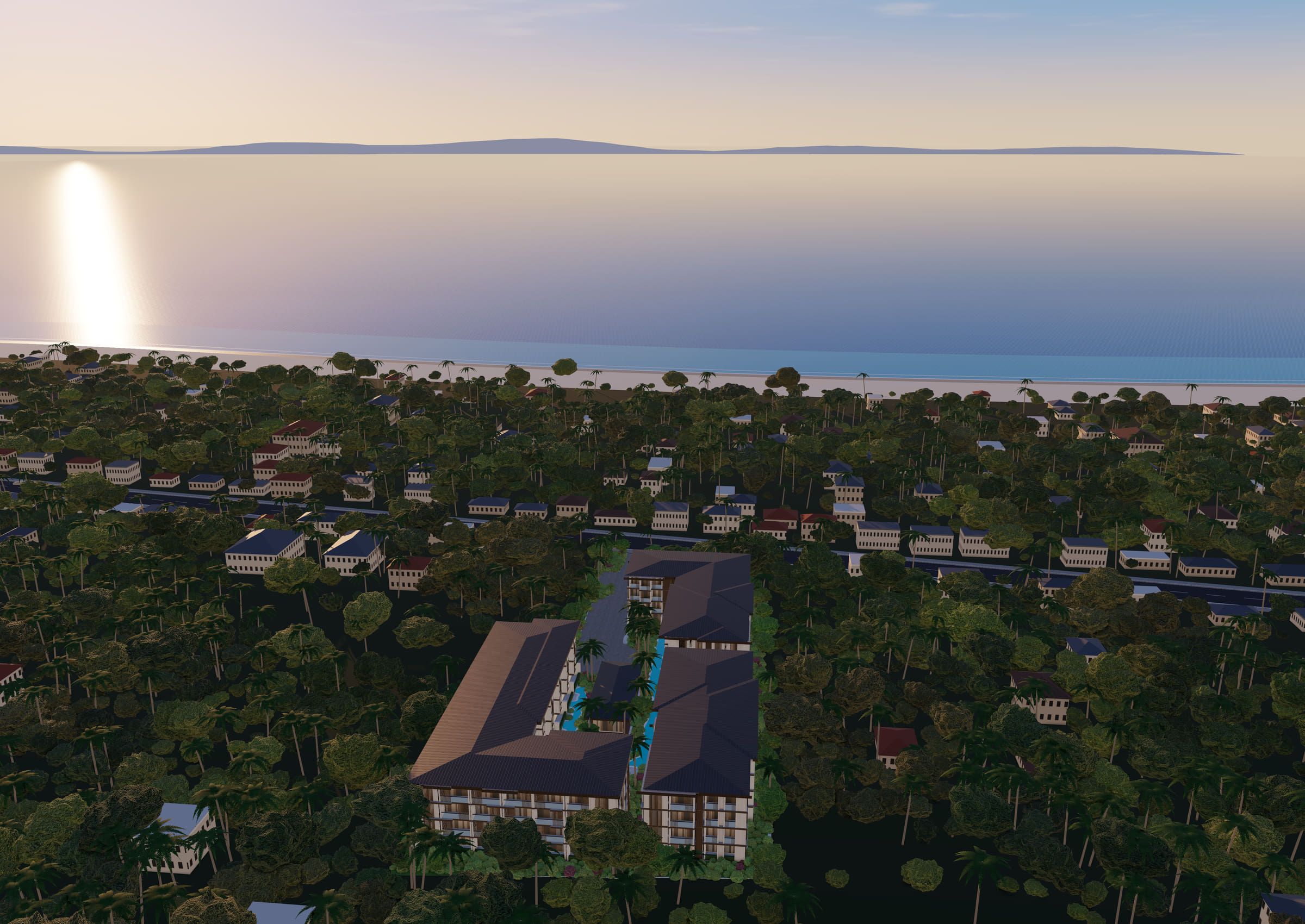

Choose your apartment in 3D
Open the 3D model of the development, pick a building and a floor, and see where each apartment sits and which way it faces.