Studio or 1-bedroom condo in Thailand: which one to buy
A studio costs less to buy and to run. A 1-bedroom gives you a separate bedroom, which suits longer stays, remote work and living in it yourself. Neither is the better choice for everyone, and this guide shows how to decide by use, running costs and resale, with the four types at The Astra Samui as a worked example.
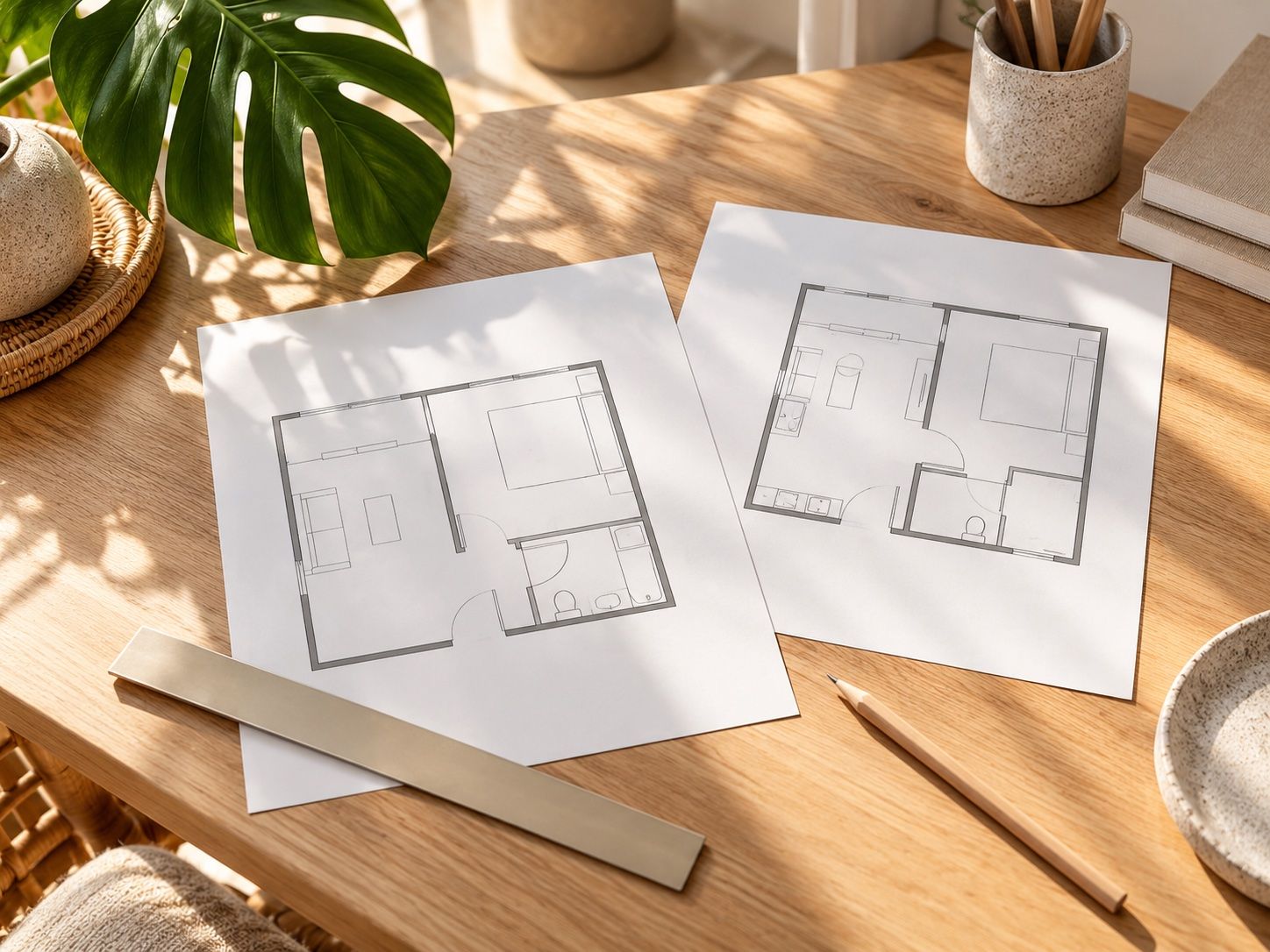
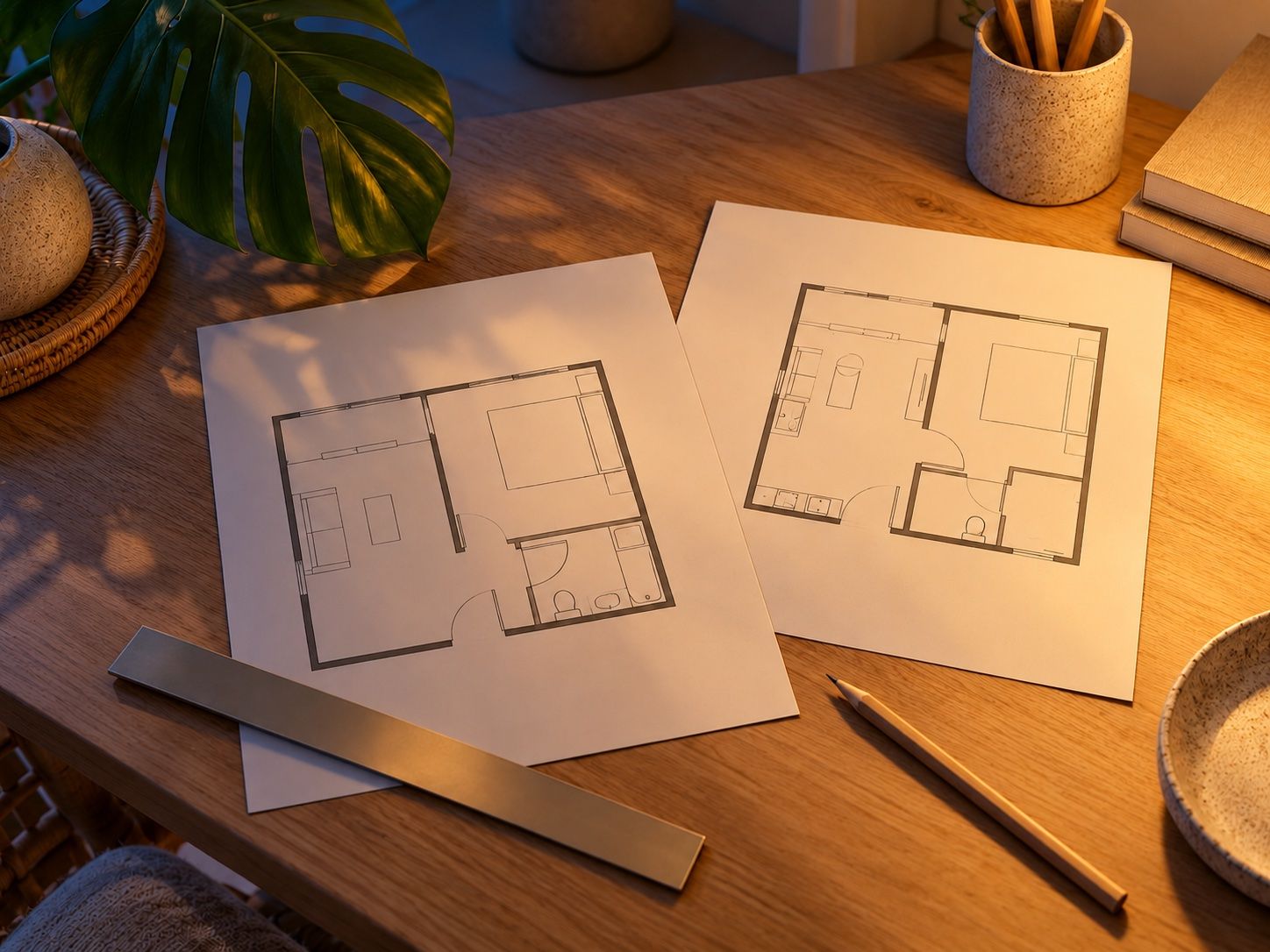
A studio costs less to buy and to run, and suits one person or a couple on shorter stays. A 1-bedroom has a separate bedroom, so it fits longer stays, remote work and living in it yourself. A 1 bedroom plus sits between the two. The right choice depends on who will use the apartment, how much you want to spend each month and how long you plan to hold it.
This guide is about the studio or 1 bedroom condo investment decision, with no figures for profit, because nobody can promise one. It covers who tends to rent each type, how costs scale with size, resale as a general question, using the apartment yourself and a step-by-step way to choose. As a worked example, it uses the four types at The Astra Samui, a development in Bophut on Koh Samui. If you want a wider guide to that development, read how to choose an apartment at The Astra Samui.
At a glance
| Studio | 1 bedroom | 1 bedroom plus | |
|---|---|---|---|
| Rooms | One room, bathroom and balcony | Bedroom and a living and kitchen area | Bedroom, living area and an extra room |
| Typical user | One person or a couple, shorter stays | A couple, longer stays, remote work | A couple who want a study or a spare bed |
| Purchase price | Lowest | Higher | Higher again |
| Running costs | Lowest | Higher | Higher again |
| Privacy for two people | Low | Good | Good, with more flexibility |
| Best for | A simple second home, the lowest cost of entry | Living in it yourself, longer stays | Hosting, working from home, a long stay |
Who rents a studio and who rents a 1-bedroom
This section is general, not specific to Thailand or to our development. We have no data that says which type is rented more, so we describe who each type is built for.
A studio suits one person or a couple who spend most of the day out. Typical guests are travellers on a short break, someone between homes and professionals on a short assignment. They want a bed, a kitchen they will rarely use and air-conditioning. A small space is not a problem for them, and a lower nightly or monthly price helps.
A 1-bedroom suits guests who spend more time in the apartment. Couples on a longer holiday, remote workers and people on a stay of several weeks to a few months usually want to close a door between the bed and the living space. They cook more, work at the table and care about the sofa. They are also the guests who are comfortable staying longer, which means fewer changeovers.
Families rarely fit either type. A couple with a child is more likely to look at a 1 bedroom plus or a 2-bedroom, which is why the larger types exist.
Two caveats apply to any rental idea. First, rental is a possibility, not a result: demand changes by season, by the building and by how the apartment is run. Second, short-term letting on Koh Samui has its own rules, and you should read them before you buy for that purpose. Our guide to the short-term rental rules on Koh Samui covers the details, and furnishing a condo for rent in Thailand explains what guests expect inside.
Running costs scale with m²
For a condo in Thailand, the fixed costs that you pay as an owner are worked out per m². That is why a larger apartment costs more to hold, even if you never rent it out.
At The Astra Samui, the developer sets two of these costs:
- Common area fee: THB 50 per m² per month (12 months paid in advance)
- Sinking fund: THB 500 per m², one-off
The common area fee pays for the shared spaces and services of the building. The sinking fund is a reserve for major repairs. Both depend on the area of your apartment. Utilities, internet, insurance, cleaning, taxes and furnishing are on top, and they depend on how you use the place, so they do not scale with area in the same way. Our guide to running costs for a condo in Thailand goes through all of them.
Worked example for the four types
The table uses the top of the area range for each type, so treat the result as the highest amount for that type. A smaller apartment within the range costs a little less.
| Type | Area | Common area fee per month | Fee for the 12 months paid in advance | Sinking fund, once |
|---|---|---|---|---|
| Studio | 26 m² | THB 1,300 | THB 15,600 | THB 13,000 |
| 1 bedroom | 34–35 m² | THB 1,750 | THB 21,000 | THB 17,500 |
| 1 bedroom plus | 40–48 m² | THB 2,400 | THB 28,800 | THB 24,000 |
| 2 bedrooms | 62–73 m² | THB 3,650 | THB 43,800 | THB 36,500 |
The arithmetic is simple: the area times the rate. A 1 bedroom costs about THB 450 a month more than a studio in common area fees, and a 1 bedroom plus about THB 1,100 more, using the top of each range. This is arithmetic, not a forecast of your bill, because the fee can change with the building’s approved budget.
What the table leaves out is just as important. A bigger apartment costs more to clean between guests, to furnish and to air-condition. A studio can have as many changeovers a year as a 1-bedroom, so cleaning and laundry per stay are not much lower. The saving from a smaller apartment is real, but it is smaller than the saving in purchase price.
Resale and liquidity: a general question
How easily you can sell later is a common worry, and it deserves an honest answer. We cannot tell you which type will sell faster, and nobody can promise it for a building that is not yet built.
What we can say in general is this. A smaller, cheaper apartment is within reach of more buyers, which can mean more enquiries when you sell. Against that, a 1-bedroom may suit more kinds of buyer, such as a couple who want to live in it. Which effect wins depends on the building, the location, the condition of the apartment, the foreign-ownership quota and the market on the day.
For a condo in Thailand, two things matter more than the type:
- Ownership form. Freehold passes to the next buyer as ownership, within the foreign quota for a foreign buyer, while a leasehold passes on only its remaining years. See freehold vs leasehold in Thailand.
- Costs at the exit. Transfer fees, taxes and agent costs apply whatever the type. Our guide to selling a condo in Thailand lists them.
A practical rule: choose the type you would be happy to keep for longer than you plan to. If the market is slow when you want to sell, you can wait in an apartment you like, but not in one you chose only for resale.
Using the apartment yourself
Some owners buy to use the apartment part of the year, and that changes the answer.
A studio works if you will use it for a few weeks at a time, travel light and spend most of the day outside. The lower costs make it easy to hold when you are not there. Living in a single room becomes tiring for some people after a few weeks, especially with two people.
A 1-bedroom makes longer stays comfortable. A door between the bed and the living area is a small thing that changes the daily experience, and it makes the apartment easier to share with a partner who works or sleeps at different hours. It also gives you a more natural place for visitors to sit.
Retirement is a separate case. If you plan to spend most of the year in Thailand, a 1 bedroom or larger is usually more realistic than a studio. Our guide to retiring in Koh Samui covers the practical side, and working remotely from Koh Samui explains what a desk-based stay needs.
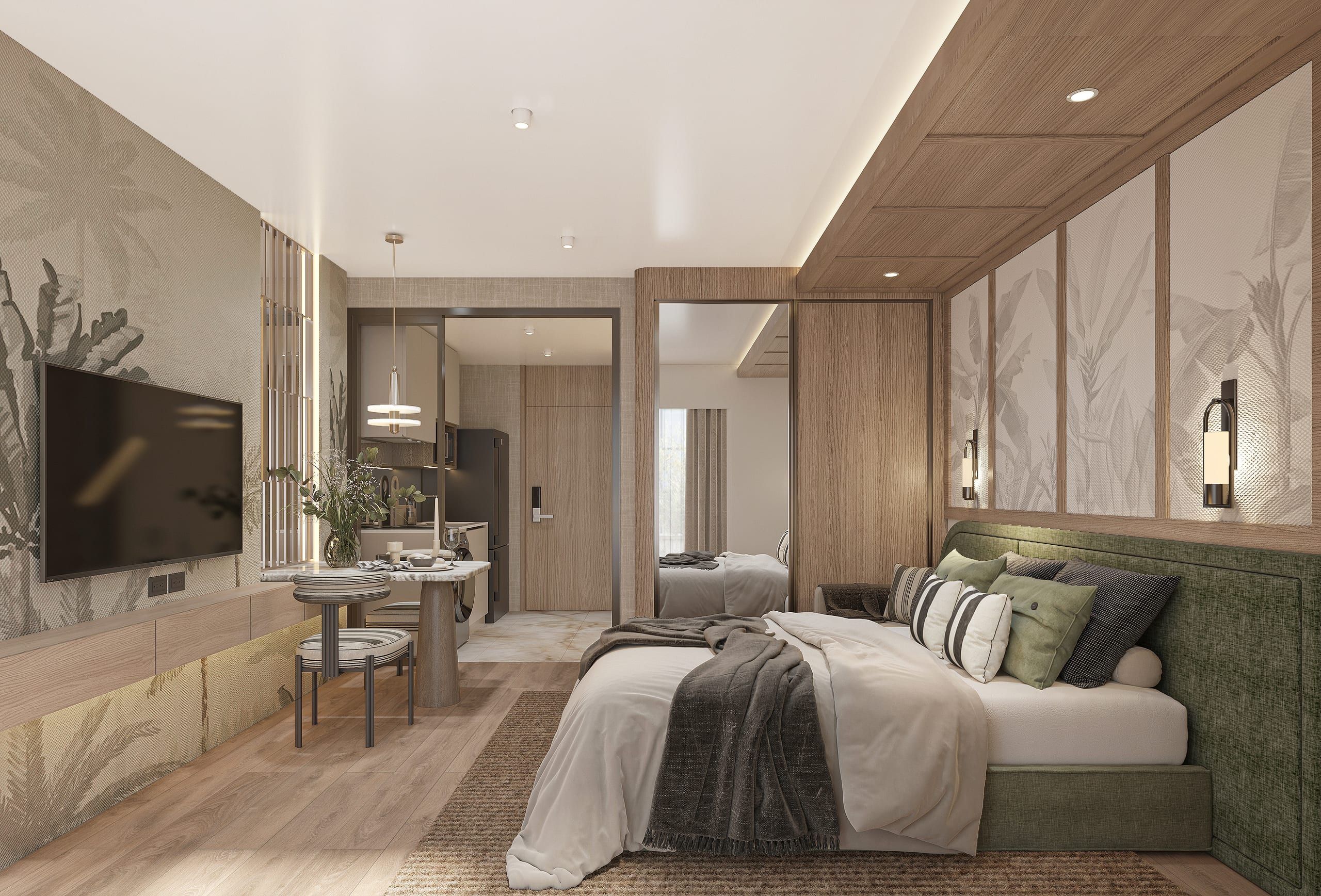
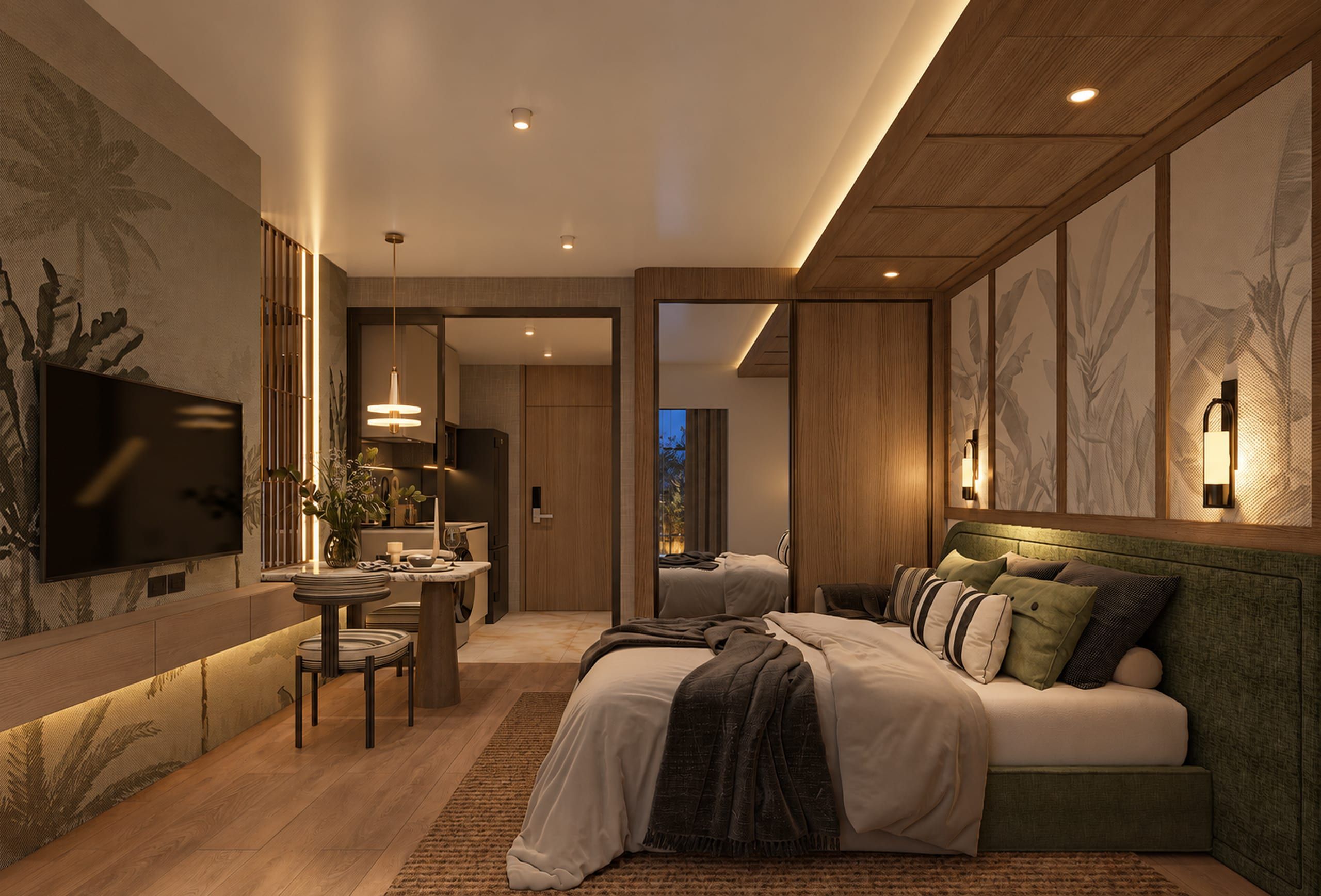
The studio render shows how a single room can be divided into sleeping, sitting and cooking zones. Look at it with your own routine in mind: where would the laptop go, and where would a guest sleep?
The 1 bedroom plus as a middle option
The 1 bedroom plus is a 1-bedroom with an extra room. According to the developer, the extra room can be a study, a children’s corner or a second sleeping area. It is larger than a 1-bedroom, so it costs more to buy and to run, as the table above shows.
Choose it if:
- you want a proper study or a small room for a guest, without moving up to two bedrooms,
- you plan to work from the apartment for weeks at a time,
- you may use the apartment with a child, or with a friend who stays for a few nights.
It is less obvious as a choice if you only plan to rent the apartment out for short stays, because guests will rarely use the extra room. In that case, think about what you would put in it before you pay for the extra area.
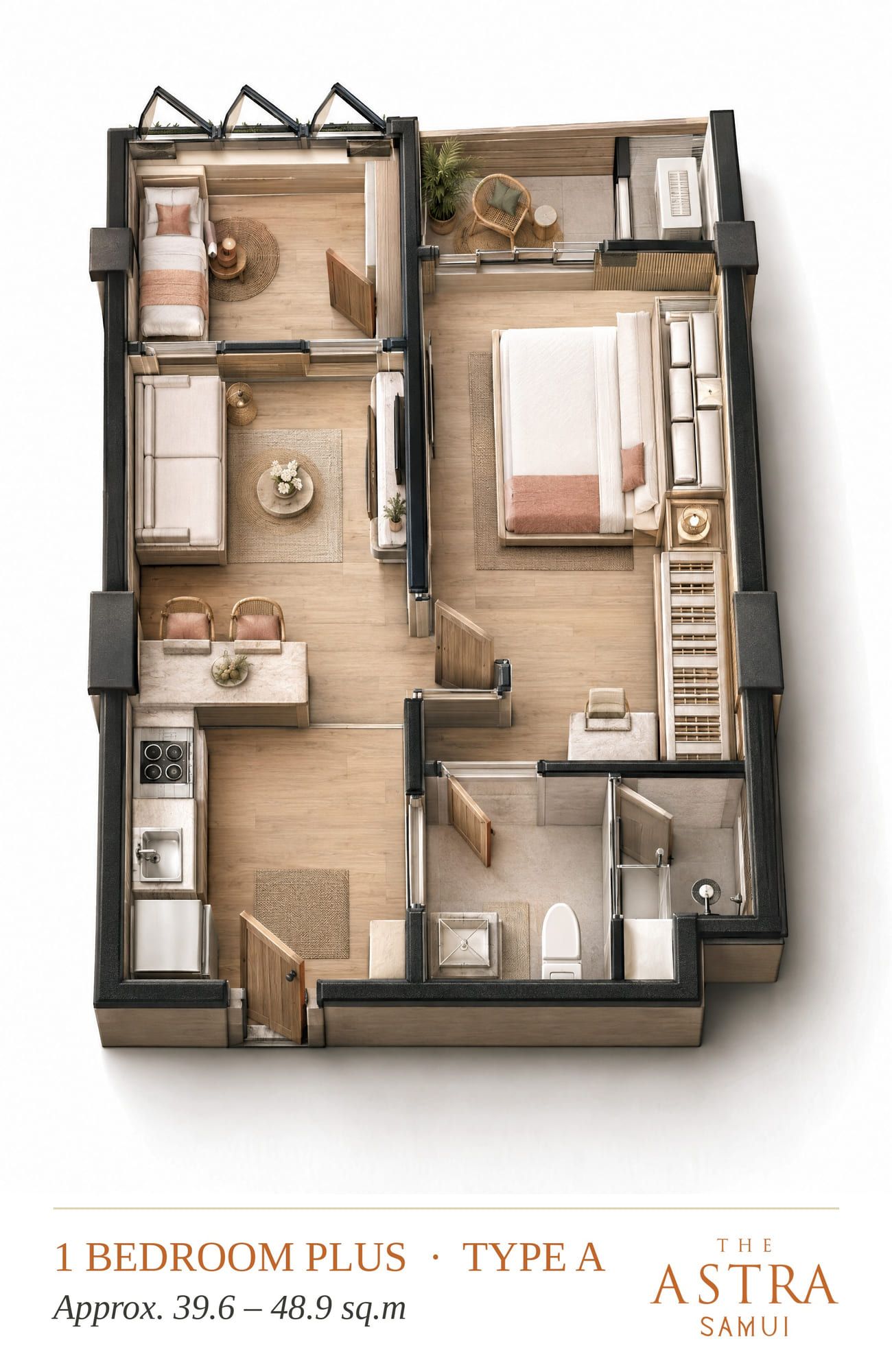
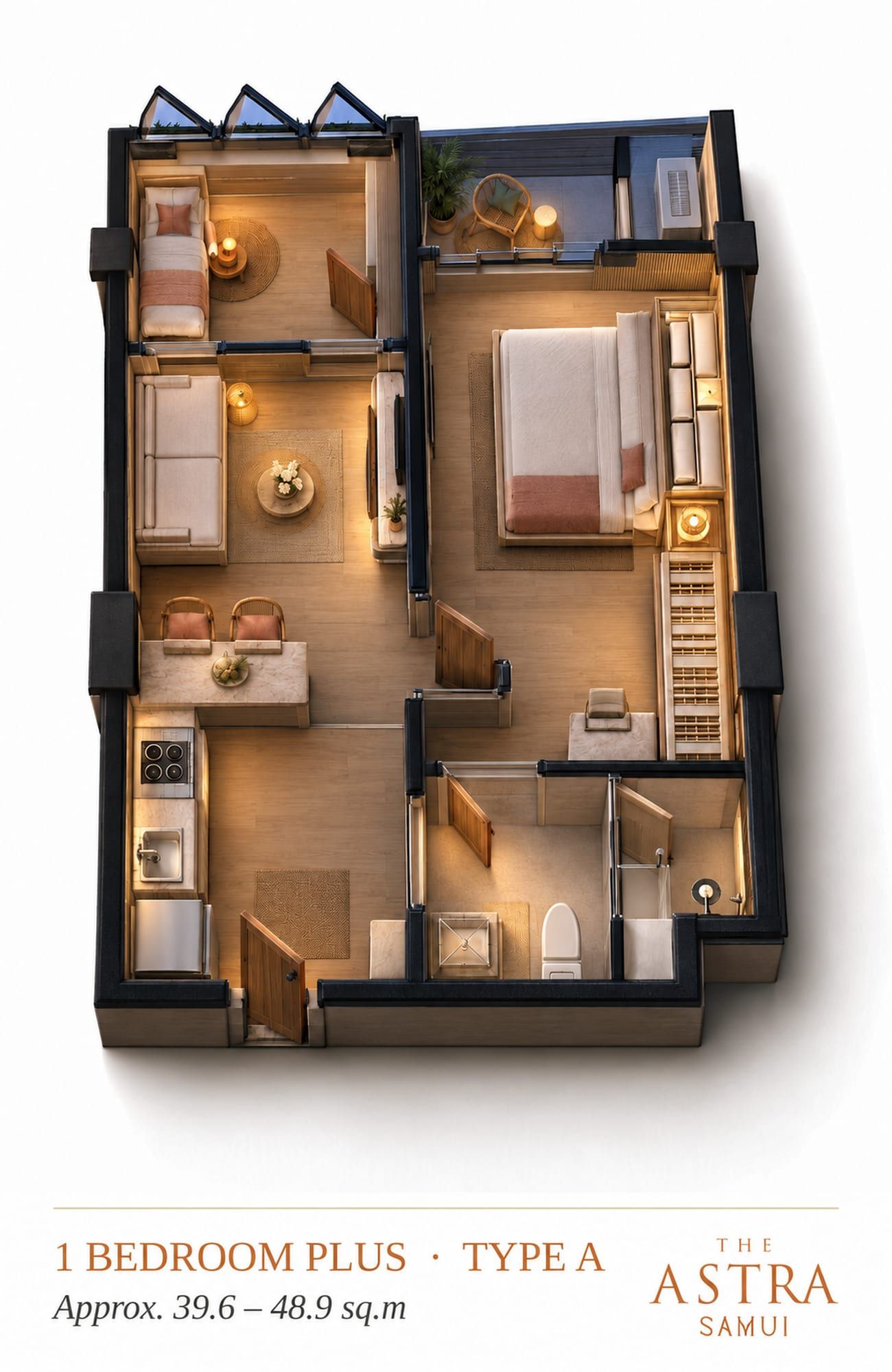
On the plan of a 1 bedroom plus A, find the extra room and check three things: its window, its door and how it connects to the living area. A room with a door and a window can be a bedroom or a study. A room that opens onto the living space is more flexible but less private.
Studio vs 1-bedroom at a glance
Use this table to compare a studio and a 1-bedroom condo in Thailand side by side. It describes the differences, not a ranking.
| Question | Studio | 1 bedroom |
|---|---|---|
| How much does it cost to buy? | Lower | Higher |
| What is the common area fee? | Lower, in proportion to area | Higher, in proportion to area |
| Who is it for? | One person, a couple on a short stay | A couple, longer stays, remote work |
| Can I live in it full time? | Possible for one person | More comfortable for one or two people |
| Can two people work in it? | Tight | Easier, with a separate bedroom |
| Does it suit a family? | No | Only for a very small family |
| Is it simple to furnish? | Yes, fewer items | More items, more choice |
| What is the main risk? | Feels small on a long stay | Costs more to buy and hold |
How to decide, step by step
Work through these steps in order and write down your answers.
- Decide the main purpose. Is it a home for part of the year, a place for longer stays or something you want to rent? If you cannot choose one, choose the one that you are most sure about.
- Decide how long you will stay at a time. Stays of a few days point to a studio. Stays of several weeks point to a 1-bedroom.
- Decide how many people will be in it. For one person, a studio can work. For two people with their own routines, choose a 1-bedroom.
- Decide whether you will work from it. If yes, count the desk, the chair and the quiet, and lean towards a 1 bedroom or a 1 bedroom plus.
- Set a ceiling for your annual running costs. Multiply the area by the fee per m² and add utilities, and check the result against the ceiling.
- Check the ownership form. Foreign freehold and leasehold have different prices and different conditions. See the foreign quota guide.
- Compare the floor plans of the type you chose. Layouts differ within a type, so look at the plan, not only the label.
- Ask for the confirmed list of what is included, and a written price, before you pay a reservation fee.
What the extra space really gives you
It helps to separate what you gain from extra square metres from what you only imagine you gain.
You gain real things. A separate bedroom means one person can sleep while the other cooks or watches something. A larger kitchen and living area make cooking easier, which matters on a stay of several weeks. A wardrobe and storage space let you leave belongings in the apartment between visits, so you do not carry a suitcase each time.
You do not gain certainty. A bigger apartment will not necessarily bring more rental interest, a faster sale or a higher price later. It costs more every month in fees and uses more of your furnishing budget. If the main reason for the larger type is a vague feeling that bigger is safer, go back to the first step of the decision list and be specific about who will use it.
A useful test is to write one sentence: “I will use this apartment for [a purpose], for [a length of stay], with [a number of people].” If the sentence fits a studio, the studio is probably enough. If you had to add words like “and sometimes a guest” or “and I will work from it”, look harder at a 1 bedroom or a 1 bedroom plus.
Common mistakes when choosing between the two
- Choosing a studio only for the price, then finding it too small after the first month. Do the sentence test above before you decide.
- Choosing a 1-bedroom only because it feels more serious. A larger apartment costs more every month, so make sure you will use the space.
- Comparing prices without comparing areas. Compare the price per m² as well as the total, and ask whether the area includes the balcony. Our checklist on how to compare Koh Samui condos has a sheet for it.
- Forgetting the costs on top of the fee. Utilities, internet, insurance and cleaning are separate, and for a rental they matter more than the type.
- Treating a render as a floor plan. Renders show the mood of a type, while the plan shows the real layout.
- Assuming a rental rule. Check the rules for short-term lets before you buy for that purpose.
The four types at The Astra Samui
The Astra Samui is a low-rise, resort-style condominium in Bophut, developed by a Thai company listed on the Stock Exchange of Thailand (SET), based in Chiang Mai. The four types give you a ladder from a compact studio to a 2-bedroom, and the pages for each type show floor plans and the apartments currently open. If you are choosing by household rather than by letting, see how much space you need in a Koh Samui condo.
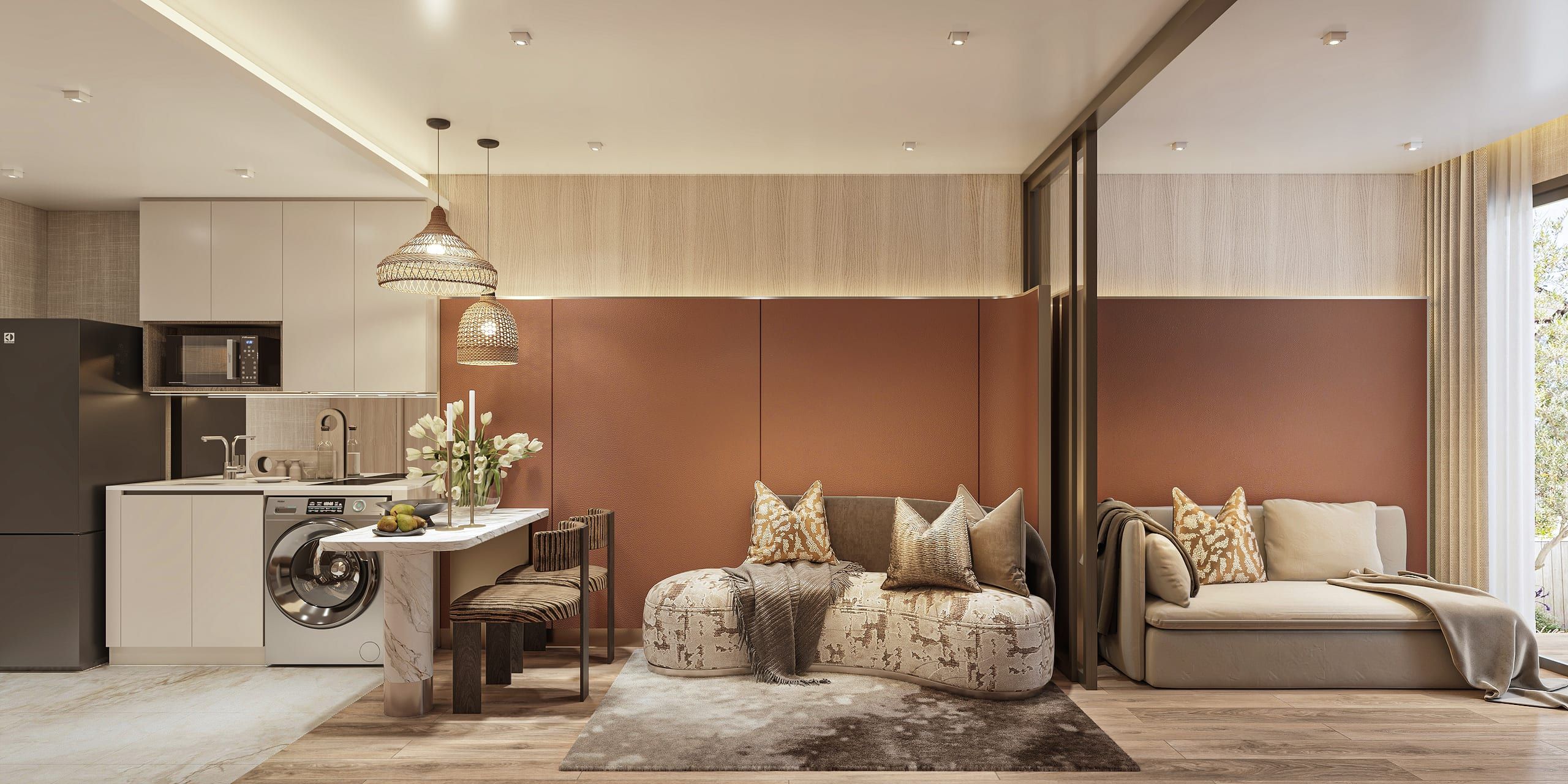
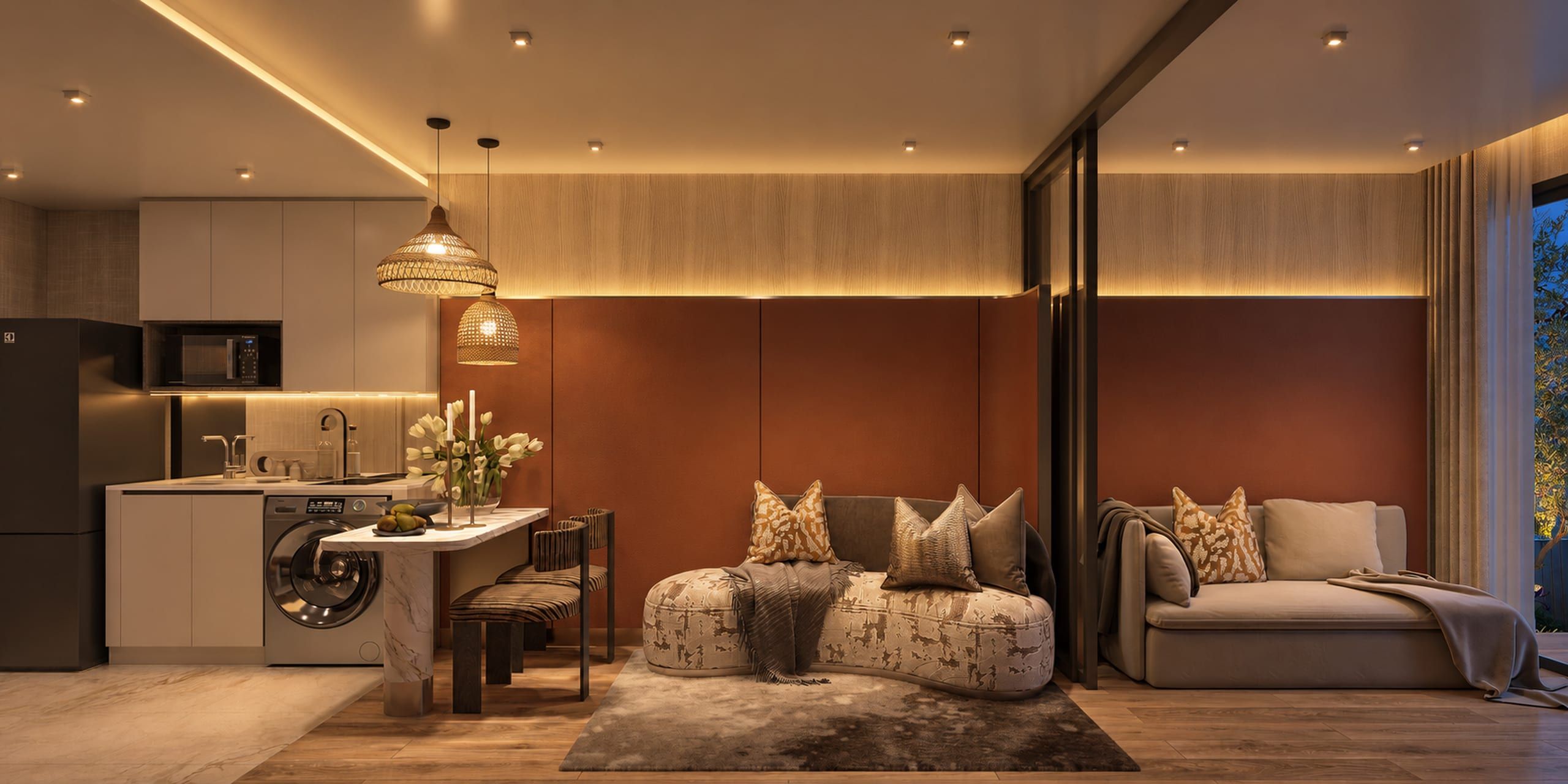
- Studio: a compact apartment of 26 m², designed for two guests.
- 1 bedroom: 34–35 m² with a separate bedroom, in two layouts, A and B.
- 1 bedroom plus: 40–48 m² with an extra room, in three layouts, A, B and C.
- 2 bedrooms: 62–73 m², for families and hosting.
The reservation fee is the same for three of the types. Reservation fee: THB 100,000 (studio, 1 bedroom or 1 bedroom plus) or THB 150,000 (2 bedrooms), fully refundable until 20 November 2026, 17:00. The indicative launch prices per m² and the full payment plan are on the prices page, and the how-to-buy guide explains each step. Prices are indicative until the official price list is published, so ask for the current figures.
Apartments come with a built-in fit-out. In every residence: air-conditioning, mattress with pillows and a water heater at the shower. The final list is confirmed in the sale and purchase agreement, so ask for it in writing.
Questions to ask before you choose
- What is the net interior area of the exact apartment, and does it include the balcony?
- Which layout is it, and where can I see the floor plan?
- What is the common area fee per m², and what does it cover?
- Is this apartment open to foreign freehold, or is it leasehold?
- What is included in the price, and where is that written?
- Which building is it in, and what is its planned handover date?
- If I rent it out, which local rules do I need to follow?
For more, see our list of questions to ask before buying.
Make the decision with a person
The type of apartment is a personal decision, and a short call often saves a lot of reading. Our team on Koh Samui can go through your plans for the apartment, show you the floor plans of the types you are considering and tell you which units are open. Book a call or browse the apartments and compare them yourself.
Questions and answers
Is a studio or a 1-bedroom better for renting out in Thailand?
Neither is better in every case. A studio has a lower purchase price and lower fixed costs, and it suits a guest travelling alone or as a couple. A 1-bedroom appeals to guests who stay longer, work remotely or want a separate sleeping area. Rental is a possibility, not a result, so compare costs and the kind of guest you want, and check the local rules for short-term lets before you decide.
Do studios cost less to run than 1-bedroom condos?
Usually yes, because the common area fee and the sinking fund are worked out per m² and a studio is smaller. At The Astra Samui both the common area fee and the one-off sinking fund are set per m², and the table in this guide works them out for each type. Utilities, cleaning and furnishing are separate and depend on how you use the apartment, not only on its size.
Is a studio easier to resell than a 1-bedroom?
Nobody can promise that. A lower price can mean more buyers can afford it, while a 1-bedroom may attract buyers who want a separate bedroom. Resale depends on the building, the location, the condition and the market at the time. Choose the type you would be comfortable holding for longer than you plan, and compare condos by their own merits.
Is a studio big enough to live in full time?
It can work for one person who accepts living in a single room, and some people prefer it for the lower running costs. For two people, long stays or working from home, some owners find a separate bedroom worth the extra space. Look at the floor plan and imagine a normal week, not only a holiday.
What is a 1 bedroom plus?
It is a 1-bedroom with an extra room. At The Astra Samui, the developer says the extra room can be a study, a children’s corner or a second sleeping area. It sits between a 1-bedroom and a 2-bedroom in size and cost, and it is often chosen by couples who work from home or have visitors.
How much bigger is a 1-bedroom than a studio at The Astra Samui?
According to the developer, a 1-bedroom is a little larger than the studio, and the 1 bedroom plus is larger again. The exact areas of each type are in the table in this guide and on the apartment pages. Running costs rise in step with the area, so a larger type costs more to run.
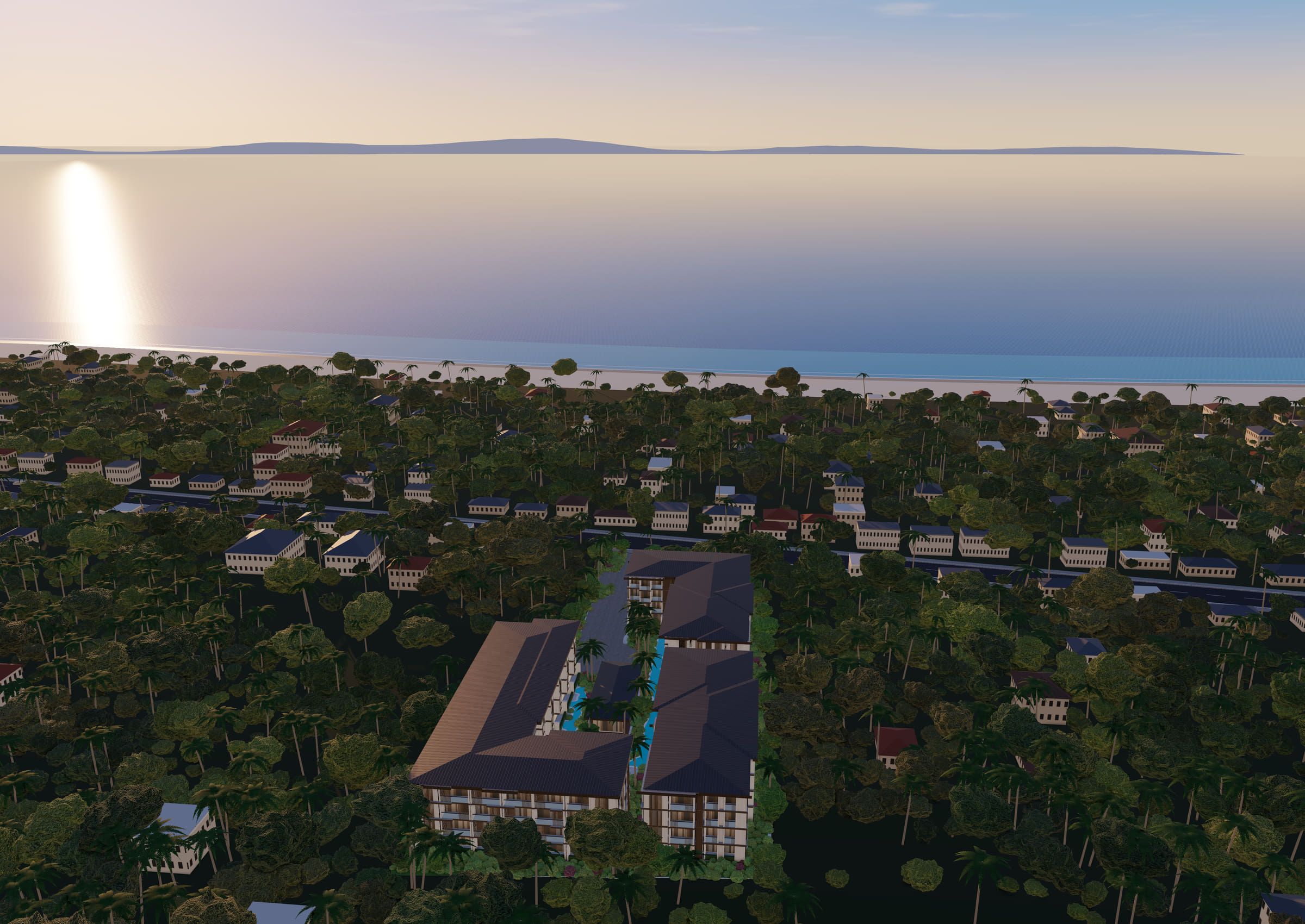
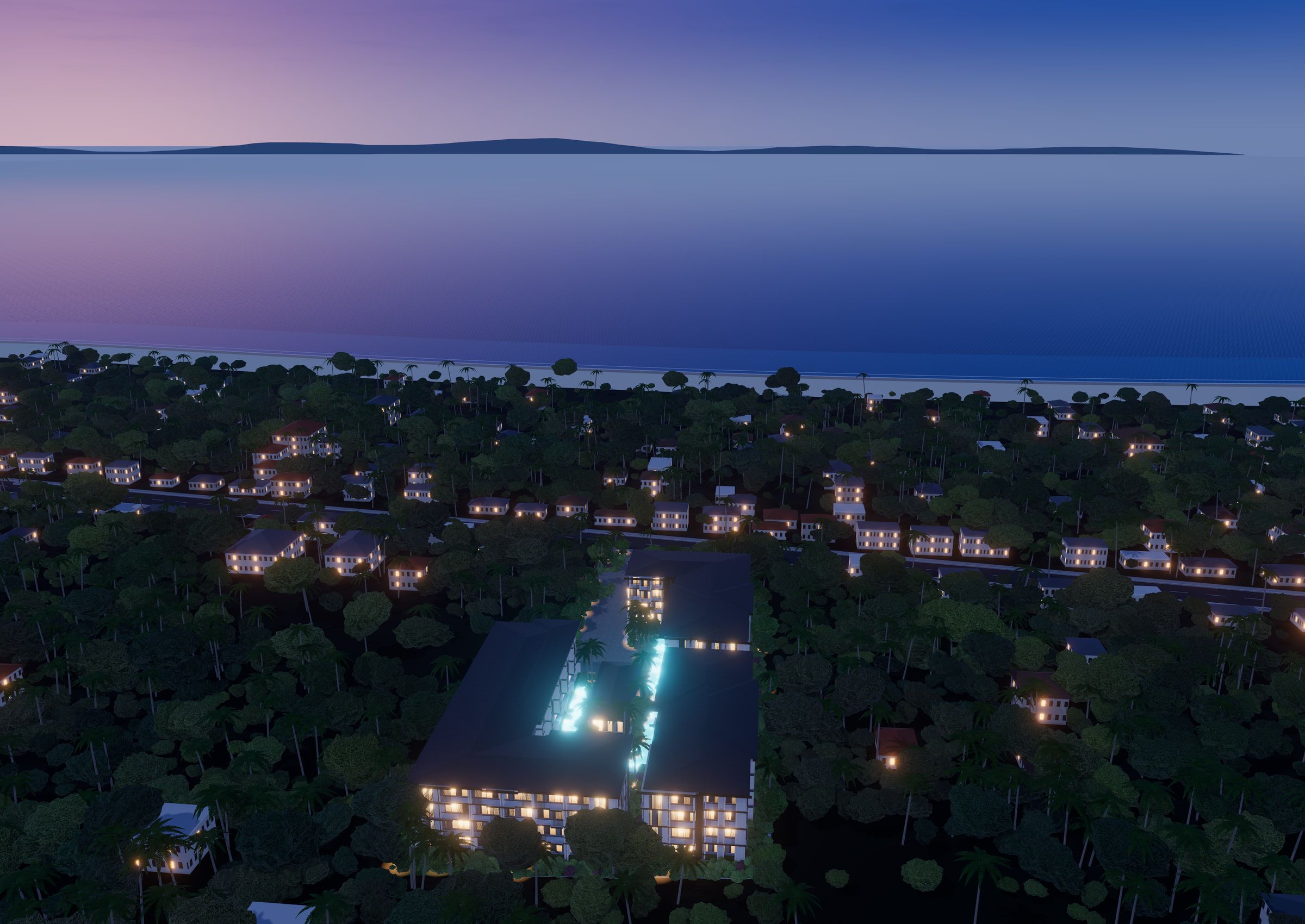
Choose your apartment in 3D
Open the 3D model of the development, pick a building and a floor, and see where each apartment sits and which way it faces.