Condo title deed in Thailand: what it proves and how to check it
A condo in Thailand is owned through its own unit title deed, issued under the Condominium Act. A chanote is the title to land, so a condo buyer does not get one. Here is what the unit title deed shows, how to check it and any mortgage at the Land Office, and what you receive at transfer.
The condo title deed in Thailand is the document that proves you own your unit. It is also called the condominium unit title deed and is known in Thai as Or Chor 2. The Land Office, the local office of the Department of Lands, issues it for one unit under the Condominium Act. It records your ownership of that unit and your share of the common property. A chanote is a different document: the title to a plot of land, and a condo buyer does not receive one.
Legal status as of 24 October 2026. This is general information, not legal advice. The rules below come from an unofficial English translation of the Condominium Act (which includes amendments up to 2008) and from law firm commentary, so the Thai text of the Act is the version that counts. Ask a lawyer licensed in Thailand to read your deed and search the Land Office record before you pay.
At a glance
- Proof of ownership: the unit title deed (Or Chor 2), issued by the Land Office for one unit. The Act’s English translation calls it the “apartment title deed”.
- Chanote: the full title to land. The land under a condominium belongs to all unit owners together, and once the building is registered the land’s title deed stays at the Land Office.
- What the deed shows: the land, the location, area and plan of your unit, your share of the common property, your name and a register of rights recorded against the unit.
- How to check it: your lawyer compares the seller’s copy with the Land Office record, confirms that the seller is the registered owner and reads the register for mortgages and leases.
- At transfer: the Land Office records the transfer on the deed and you receive the owner’s copy showing you as the owner. In a new building, unit deeds are issued only once the building is registered as a condominium, which normally follows completion.
- At The Astra Samui, according to the developer: Foreign freehold: the unit title deed is issued in the buyer’s own name.
Which document proves you own a condo
Thai law does not, as a rule, let foreigners own land. The Condominium Act is the main exception: it lets a foreigner own a unit, within the foreign quota. Our guide on whether foreigners can buy property in Thailand covers the conditions.
The Act also defines the proof of ownership. In the unofficial English translation on thailandlawonline.com, the “apartment title deed” is the document that shows ownership of the unit and joint ownership of the common property. In practice people say unit title deed, condo title deed, condominium title certificate or Or Chor 2.
The deed exists only once the building is registered as a condominium. According to ThaiLawOnline, a Thai law firm, a condominium exists only once it is registered with the Department of Lands under the Act. When the registration is accepted, the Land Office issues a deed for each unit, following the registered plan (section 20). From then on each unit can be sold, mortgaged and inherited on its own.
Before that point you hold contract rights, not a title to the unit: first a reservation agreement, then a sale and purchase agreement. They are the developer’s promises to build and transfer. Our guides to buying off plan and to the reservation agreement cover that stage.
Condo title and chanote
Some websites call a condo deed a “chanote”. The word is used loosely, and it causes confusion just when you need to ask for the right document. In law they are two documents.
| Condo unit title deed (Or Chor 2) | Chanote | |
|---|---|---|
| Covers | One unit and a share of the common property | One plot of land |
| Law | Condominium Act | Land Code |
| Foreign owners | Allowed for units, within the foreign quota | Foreigners generally cannot own land |
| Usual holder | The unit owner | The landowner |
Tilleke & Gibbins, a law firm, describes the chanote as the highest level of Thai land document, one that represents full and complete ownership rights. ThaiLawOnline lists the chanote and the Nor Sor 3 Gor as land title documents, and the Or Chor 2 as the document for condo units.
The chanote still matters in the background. To register a condominium, the owner of the land and building files the land title deed with the application (section 6). Once the registration is accepted, the Land Office sends that land title deed to the land official for an entry that the land is subject to the Condominium Act, and the deed stays at the office (section 9). After that, no other rights over the land can be registered separately (section 10). The land becomes part of the common property that all owners share (section 15).
So you share the land through your unit. You do not hold a chanote for it, and ThaiLawOnline notes that your share of the land cannot be separated from the unit. In practice, ask for the unit title deed, not a chanote. If a seller shows you a chanote for a condo, ask which plot it covers and what property you are actually buying.
What the title shows
Section 21 lists what a unit title deed must contain at least. The table adds what to check on each item.
| On the deed | What to check |
|---|---|
| Position and area of the condominium’s land | It is the plot named in your contract |
| Location, area and plan of the unit | Unit number, floor, building and size match your sale and purchase agreement |
| Your ownership ratio in the common property | Your share of the land, structure and shared facilities |
| Name of the owner | Matches the passport or ID of the person named |
| Index of registered rights and acts | Any mortgage, lease or other right recorded against the unit |
| Signature and seal of the Land Office official | Your lawyer compares the owner’s copy with the office copy |
Two items deserve a closer look. The first is the area. Ask how it is measured, for example whether balconies are counted. Common fees are usually quoted per m², so the figure can affect what you pay each year. The second is the ratio. In the unofficial translation it is worked out from each unit’s price against the total price of all units when registration is applied for (section 14). The Act uses it to share tax and common service costs between owners (sections 14 and 18), subject to the building’s regulations.
The deed is made in two copies: one for the owner and one kept at the Land Office (section 21). It is a Thai document, so ask your lawyer for a written translation of the key lines. Do not rely on a translation supplied only by the seller.
Checking it at the Land Office
How you check a title deed in Thailand depends on the stage. On a building that is not yet registered there is no unit deed to check, so you check the developer and the land instead. For a finished building or a resale, ask your lawyer to work through the steps below at the Land Office that covers the building. According to the 2025 Multilaw guide by Tilleke & Gibbins, land transactions are registered at the Land Office of the province where the property is.
- Collect the seller’s copy of the deed and a copy of the seller’s ID. The seller’s name must match the registered owner on the deed.
- Have your lawyer request the Land Office record for the unit. The Multilaw guide says Land Office records are public and that interested parties can obtain details such as the current owner’s name if they present the required documents, so leave the request to your lawyer.
- Compare the seller’s copy with the office record. The Land Office keeps its own copy of every deed, so the two should agree on every detail, including the register of rights.
- Read the register for mortgages, leases and other registered rights. In a 2012 Bangkok Post column, Tilleke & Gibbins noted that mortgages, easements and similar encumbrances over land must be in writing and registered at the Land Office to be valid, and that a lease longer than three years must be registered. Section 30 of the Act applies the Land Code’s registration rules to units as well.
- Ask for the debt-free certificate. Under section 29, the Land Office registers a transfer of ownership of a unit only if the unit is free of common expense debts, shown by a certificate from the condominium’s juristic person (the legal entity of the owners that runs the building). In the translation, the manager issues it within 15 days of the request once the owner has paid. ThaiLawOnline puts it simply: a unit with unpaid fees cannot be transferred. The same section says this does not apply to an ownership transfer registered before the juristic person is registered, which, read with section 31, can cover a first transfer from the developer. Your lawyer should confirm which documents apply to you.
- Run a litigation search. The same 2012 column advises checking whether court cases against the owner could affect the property.
When the buyer is a foreigner, the Land Office also checks the foreign quota letter and the bank proof that the money came from abroad, which in the unofficial translation has to cover at least the price of the unit (section 19 ter). Our guides to the foreign quota and the FET (foreign exchange transaction) form explain both.
Mortgages and encumbrances
Because each unit has its own deed, a unit can be mortgaged on its own. A bank’s mortgage on a resale unit shows in the register of rights. Before you pay, ask your lawyer to agree with the seller and the seller’s bank exactly how the mortgage will be discharged, and that it is cleared by the time your transfer is registered.
On a new building the question is different. A developer may have mortgaged the project land. The Act anticipates this, so it is not a problem in itself. What matters is the release. Sections 22 and 23 of the Act, in the unofficial translation, deal with this case. If the land was mortgaged before registration with the lender’s consent, the Land Office records the mortgage in every unit deed together with the amount that the lender is to receive from that unit. Section 23 then says the first buyer from the developer receives the unit free of that mortgage. Treat that as a reason to ask, not as a guarantee. Ask the developer in writing whether the project land is mortgaged, to which lender, who pays the amount recorded against your unit and when, and how your unit will be released.
Leases follow the unit. In its 2012 column, Tilleke & Gibbins notes that a contract to lease immovable property does not end when ownership changes: the new owner takes on the previous owner’s duties towards the tenant. If a unit comes with a registered lease, check its term before you buy. A leasehold purchase works through a registered lease too, and our guide on freehold vs leasehold covers the differences.
What you receive at transfer
Transfer is registered at the Land Office with you and the seller, who is the developer on a new building. According to ThaiLawOnline, the officer checks the foreign quota letter, the bank proof of the foreign currency transfer, the debt-free certificate and both parties’ identity documents. On a first transfer from the developer the debt-free certificate may not be needed (see step 5 above), so ask your lawyer for the list that applies. The transfer fee and the seller’s taxes are paid at the same counter. At The Astra Samui the developer states: Transfer fee: 2%, split equally (1% paid by the buyer). For a leasehold unit, ask the developer which registration fee applies. Our guide to buying costs lists the rest.
On a freehold purchase you leave with the owner’s copy of the unit title deed, showing your name. The Land Office keeps its copy (section 21). Check it on the spot: your name as in your passport, the unit number, floor and building, the area, the ownership ratio, and no mortgage in the register that you did not agree to.
Keep the deed with your sale and purchase agreement and the bank documents from each payment, because you may need them when you sell. Scan all of it. If a deed is lost or badly damaged, the Act lets the owner apply for a substitute, and the original is then cancelled (sections 25 and 26).
The title at The Astra Samui
The Astra Samui is a low-rise, resort-style condominium in Bophut, on Koh Samui, and it is not yet complete. According to the developer: Foreign freehold: the unit title deed is issued in the buyer’s own name. The developer adds: Leasehold: a registered 30-year lease. Renewal is not guaranteed. A lease gives a right to use the unit for a set period, which is not the same as a unit title deed in your name. How the lease is registered is not among the facts we have confirmed, so ask for the lease terms in writing.
A unit title deed can be issued only after the building is registered as a condominium, which on a project still being built normally comes after completion. According to the developer, the final payment falls at handover and transfer of ownership. Payments: 30% by 22 December 2026 (less the reservation fee), 30% when the roof structure is complete (planned for February 2028), 40% at handover (planned for December 2028). The developer does not offer financing.
Whether the project land carries a mortgage, and how the condominium will be registered, are not among the facts we have confirmed with the developer, so we do not state either here. Put both questions to the developer in writing before you reserve. We can pass them on.
Varsovia Estate is the sales agent for The Astra Samui, with an office on Koh Samui. We can send you the developer’s documents for your lawyer. Read how buying works step by step, see the apartments and prices, which start from THB 3,687,000 (about €98,000, NBP average rate of 23 October 2026), or book a call to go through your questions with our team.
Questions and answers
Is a condo title deed in Thailand a chanote?
No. A condo unit is owned through its own unit title deed, known in Thai as Or Chor 2, issued under the Condominium Act. A chanote is the full title to a plot of land under the Land Code. Some websites use the word chanote loosely for a condo deed, but the two documents are different.
What does a condo title deed in Thailand show?
According to an unofficial English translation of the Condominium Act, at least the position and area of the land, the location, area and plan of the unit, your ownership ratio in the common property, the owner’s name, an index of registered rights and the signature and seal of the Land Office official.
How do I check a condo title deed in Thailand?
Ask your lawyer to compare the seller’s copy with the Land Office record, confirm that the seller is the registered owner and read the register of rights for a mortgage or lease. On a resale, also ask for the building’s debt-free certificate. Check for court cases against the owner and match the unit details to your contract.
When do I get the title deed for an off-plan condo?
Only after the building has been registered as a condominium, which for a building still under construction normally comes after completion. Until then you hold contract rights, not title. At transfer the Land Office registers the unit in your name and you receive the owner’s copy of the deed.
What happens if I lose my condo title deed?
The Condominium Act lets the owner apply for a substitute deed if the original is lost or badly damaged, and the original is then cancelled. Keep a scan of the deed with your contract and bank documents, and tell your lawyer straight away.
Sources
Primary sources used in this article, with the date we last checked each one.
- Condominium Act B.E. 2522 (1979) as amended in 2008, unofficial English translation (thailandlawonline.com) (accessed 24 October 2026)
- ThaiLawOnline (thailawonline.com, Thai law firm): Condominium Act, unit title deed and checks at transfer, updated 19 October 2026 (accessed 24 October 2026)
- Tilleke & Gibbins (law firm): Multilaw Real Estate Guide Thailand 2025, 23 July 2025 (accessed 24 October 2026)
- Tilleke & Gibbins (law firm): Due Diligence Checklist for Property Buyers, Bangkok Post column, 10 August 2012 (accessed 24 October 2026)
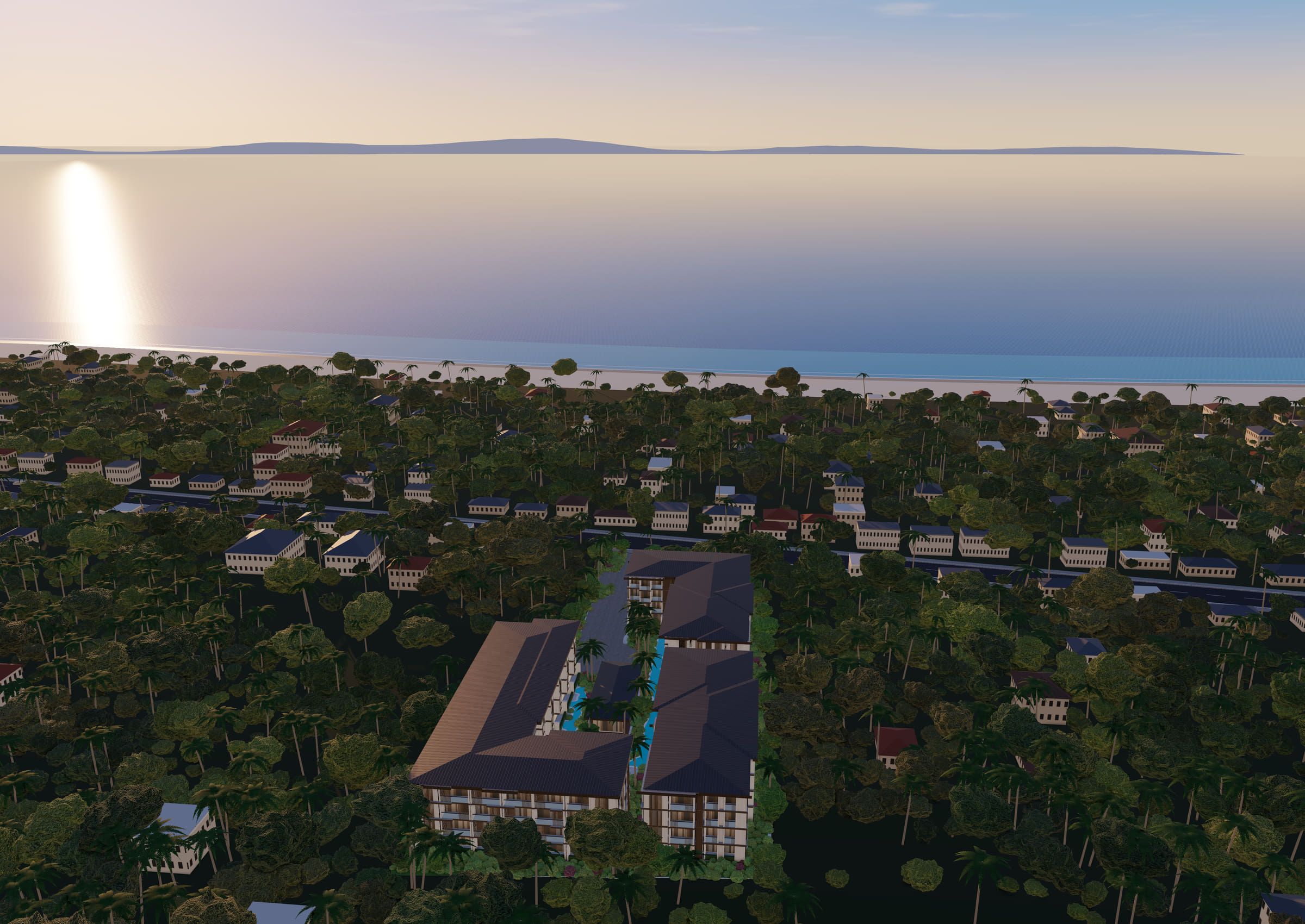

Choose your apartment in 3D
Open the 3D model of the development, pick a building and a floor, and see where each apartment sits and which way it faces.