Can foreigners buy property in Thailand?
Yes, but not every kind of property. You can own a condominium apartment in your own name. Land is, in practice, closed to foreign buyers. Below: what the law allows, where it stops, and how paying from abroad works.
Yes, foreigners can buy property in Thailand, but mostly apartments. You can own a condominium unit freehold in your own name if the building still has room in its foreign quota and you pay with money sent from abroad. Land is, in practice, closed to foreigners.
That covers most buyers. Below we explain where the limits come from, what your options are for houses and land, and what to check before you pay anything. Legal status as of 24 October 2026. This is general information, not legal advice. The rules below come from the Condominium Act, the Land Code, the Civil and Commercial Code, the Department of Lands and the Bank of Thailand, and a Thai lawyer should confirm how they apply to your purchase.
What a foreigner can and cannot own
| Type of property | Can a foreigner own it? | How |
|---|---|---|
| Condominium unit (apartment) | Yes | Freehold in your own name, within the foreign quota |
| Condominium unit, quota full | Yes, as a lease | Registered lease of up to 30 years |
| Land | Generally no | Only under a treaty or a narrow investment exception |
| House or villa | The building, not the land | Lease of the land, registered at the Land Office |
Each row has conditions, which the sections below cover one by one.
Condominiums: the route the law opens for foreigners
The Condominium Act is what lets foreigners own a home in Thailand. Section 19 lists who may hold a unit. Among them are foreigners with permanent residence, people admitted under the investment promotion law, and foreigners who bring the purchase money into Thailand in foreign currency or pay it from a non-resident baht account or a foreign currency account held in Thailand. For buyers from Europe, the UK, Singapore or Hong Kong, that last category is the one that applies.
When you buy freehold, the Land Office registers the unit in your name and you receive a title deed for that unit. It is the same kind of title a Thai owner gets. You can sell it, rent it out (subject to the building’s rules and the law on short stays) and leave it to your heirs, although heirs face rules of their own.
How the foreign quota works
Section 19 bis caps foreign ownership in each condominium. The limit is up to 49% of the total unit area in a condominium. Two details matter in practice.
- The quota is counted by floor area, not by the number of apartments. A building with many studios and a few large units fills its quota differently from one with equal units.
- The quota applies to the building as a whole. Once foreign owners hold the maximum share, the Land Office will not register another freehold transfer to a foreigner in that building.
In a new development, the developer usually holds the figures. In a finished building, the condominium juristic person (the owners’ management body) usually does. The Land Office checks the quota at transfer. Before you reserve, ask for written confirmation that the quota still has room for the unit you want.
When the quota is full
If a building has no foreign quota left, you can still take the unit on a registered lease. A resale from one foreign owner to another should not raise the foreign share, so it may be possible even in a building near its limit, but this is not automatic. Your lawyer confirms it with the Land Office before transfer.
Freehold or leasehold
Freehold means you own the unit outright, with no end date. Leasehold means you hold a long lease registered at the Land Office, while someone else remains the owner.
Under the Civil and Commercial Code, a lease of immovable property cannot exceed 30 years, and a lease longer than three years must be made in writing and registered to be fully enforceable. Contracts sometimes mention an option to renew. Read that clause with your lawyer: a promise to renew is a contract term, and it does not carry the same weight as the registered lease itself. In Decision 4655/2566, published in 2025, the Supreme Court held void renewal promises that in effect stretched a lease beyond 30 years on the original terms. A 2024 proposal to allow 99-year leases has not become law as far as we could find on 24 October 2026.
For a buyer who wants to own the apartment and pass it on, freehold within the quota is the stronger position. Leasehold can make sense when the quota is full or when the price difference matters to you. Our guide to how to buy compares the two in detail.
What a foreigner cannot own
Land
Section 86 of the Land Code allows a foreigner to acquire land only under a treaty that grants that right. As far as we know, no such treaty is in force today. Your lawyer should confirm this for your nationality.
Section 96 bis adds a narrow exception: a foreigner who brings at least THB 40,000,000 of qualifying investment into Thailand and keeps it there for at least five years may apply to the Minister of Interior for permission to buy up to one rai (1,600 m²) of land for a home. The investment threshold is high, approval is discretionary and the conditions are strict. If you want a holiday home or somewhere to retire, it is rarely a realistic route.
Houses and villas
You can own a house as a building, but not the land beneath it. The common arrangement is a lease of the land, registered at the Land Office for up to 30 years, with the house owned separately. How the building is registered, and what happens when the land lease ends, depends on the contract. That is why villas need more legal work than condominiums.
The money must come from abroad
On the foreign currency route that most overseas buyers use, you must show that the purchase money came into Thailand in foreign currency before the unit is registered in your name. The Department of Lands asks for this evidence at the transfer.
In practice it works like this:
- You send the money from your own bank account abroad, in foreign currency, not in Thai baht.
- In the transfer instructions you state the purpose, for example the purchase of a condominium unit, with the project name and unit number.
- The receiving Thai bank converts the money and issues a document confirming the foreign exchange transaction, usually called the FET form (Foreign Exchange Transaction form). Banks have traditionally issued it for transfers of about US$50,000 or more, a threshold the Bank of Thailand set in 2010; for smaller amounts you usually ask for a credit advice or a bank letter. Practice differs between banks, so ask yours which document it will give you before you send.
- You present the document at the Land Office when the unit is transferred to you.
If you pay in instalments during construction, each payment needs the same treatment. Keep every document until the day you sell: the same evidence can help when you later take the sale money out of Thailand. Fintech transfers can be a problem if the money arrives already converted to baht, so check with the receiving bank before you use one.
Common mistakes
Do not put the property in someone else’s name. Some buyers are told they can own land or a villa through a Thai person or a business set up for that purpose. Own the property in your own name, either freehold within the quota or through a registered lease.
Do not pay from the wrong account or in baht. If the money arrives in baht from a Thai account, or is sent by someone other than the buyer, the bank may not issue the document you need, and the Land Office may refuse to register the unit in your name.
Do not reserve before the quota is confirmed. Ask for written confirmation that freehold is available for your unit before you pay a reservation fee.
Do not treat a renewal clause as a guarantee. A lease renewal promised in the contract is not a registered right.
Do not expect a visa with the property. Owning a condominium does not by itself give you the right to live in Thailand. Visa routes have their own conditions, set by the Immigration Bureau and the Ministry of Foreign Affairs. A long-stay route linked to a property purchase has been reported since late 2025, but it has its own criteria and approval is not automatic, so check the current rules before you buy with a visa in mind.
How this works at The Astra Samui
The Astra Samui is a low-rise, resort-style condominium in Bophut, on Koh Samui. According to the developer, ownership is freehold; foreign buyers purchase freehold within the foreign quota, and leasehold is also available. Foreign freehold: the unit title deed is issued in the buyer’s own name. Leasehold: a registered 30-year lease. Renewal is not guaranteed.
Prices start from THB 3,687,000 (about €98,000, NBP average rate of 23 October 2026). Construction is ongoing, with handover planned for December 2028 according to the developer, so ask for the payment and transfer schedule in writing.
We at Varsovia Estate are the sales agent for The Astra Samui. We will help you ask the developer for written confirmation of the foreign quota before you reserve, and explain the payment steps for your country. We do not give legal advice, and we recommend an independent Thai lawyer for the purchase agreement. For more on this project, read questions to ask before you buy at The Astra Samui, see the available apartments and the prices, or book a call with us.
Questions and answers
Can a foreigner own a condo in Thailand?
Yes. A foreigner can own a condominium unit freehold in their own name, as long as the foreign owned share of the building stays within the legal limit of 49% of the total floor area of all units, and you meet one of the conditions in section 19 of the Condominium Act. For most overseas buyers that means bringing the purchase money into Thailand in foreign currency.
Can a foreigner own land in Thailand?
In practice, no. The Land Code allows foreign land ownership only under a treaty or a narrow investment exception (a high minimum investment kept in Thailand for at least five years, for up to one rai) that requires ministerial approval. Most foreign buyers lease land instead, for a registered term of up to 30 years.
Can I buy a house in Thailand as a foreigner?
You can own a house as a building, but not the land under it. The usual arrangement is a registered lease of the land. A condominium is the only common way to own a home in Thailand outright in your own name.
Does buying property in Thailand give me a visa?
No. Owning a condominium does not by itself give you the right to live in Thailand. Visas are a separate process with their own conditions, set by the Immigration Bureau and the Ministry of Foreign Affairs. Since late 2025 there have been reports of a long-stay route that takes a qualifying property purchase into account, but it has its own conditions and approval is not automatic.
Sources
Primary sources used in this article, with the date we last checked each one.
- Condominium Act B.E. 2522 (1979) as amended, Thai text (Office of the Council of State) (accessed 23 October 2026)
- Condominium Act (No. 3) B.E. 2542, English text (Department of Lands) (accessed 24 October 2026)
- Regulations concerning purchasing a condominium in Thailand, FET form (Department of Lands) (accessed 23 October 2026)
- Acquisition of Land by Alien (Department of Lands) (accessed 24 October 2026)
- Land Code Amendment Act (No. 8) B.E. 2542, Section 96 bis (Department of Lands) (accessed 23 October 2026)
- Civil and Commercial Code, lease of immovable property, Sections 538 and 540 (Office of the Council of State) (accessed 23 October 2026)
- Can foreigners buy real estate in Thailand? (Thailand.go.th) (accessed 24 October 2026)
- Ownership of real estate by foreigners: requesting ownership of a condominium unit (Thailand.go.th) (accessed 24 October 2026)
- Procedure for accepting foreign money transfers to buy assets in Thailand (Thailand.go.th) (accessed 23 October 2026)
- Exchange Control Regulation (Bank of Thailand) (accessed 24 October 2026)
- Bank of Thailand News No. 45/2010: higher threshold for the foreign exchange transaction form (accessed 24 October 2026)
- Addleshaw Goddard: Thai Supreme Court strikes down automatic long-term lease renewals (Supreme Court Decision 4655/2566) (accessed 24 October 2026)
- Bangkok Post: PM allays foreign quota fears (June 2024) (accessed 24 October 2026)
- Bangkok Post: Long-stay visas for condo buyers in Phuket clarified (2026) (accessed 24 October 2026)
- Immigration Bureau, Thailand (accessed 23 October 2026)
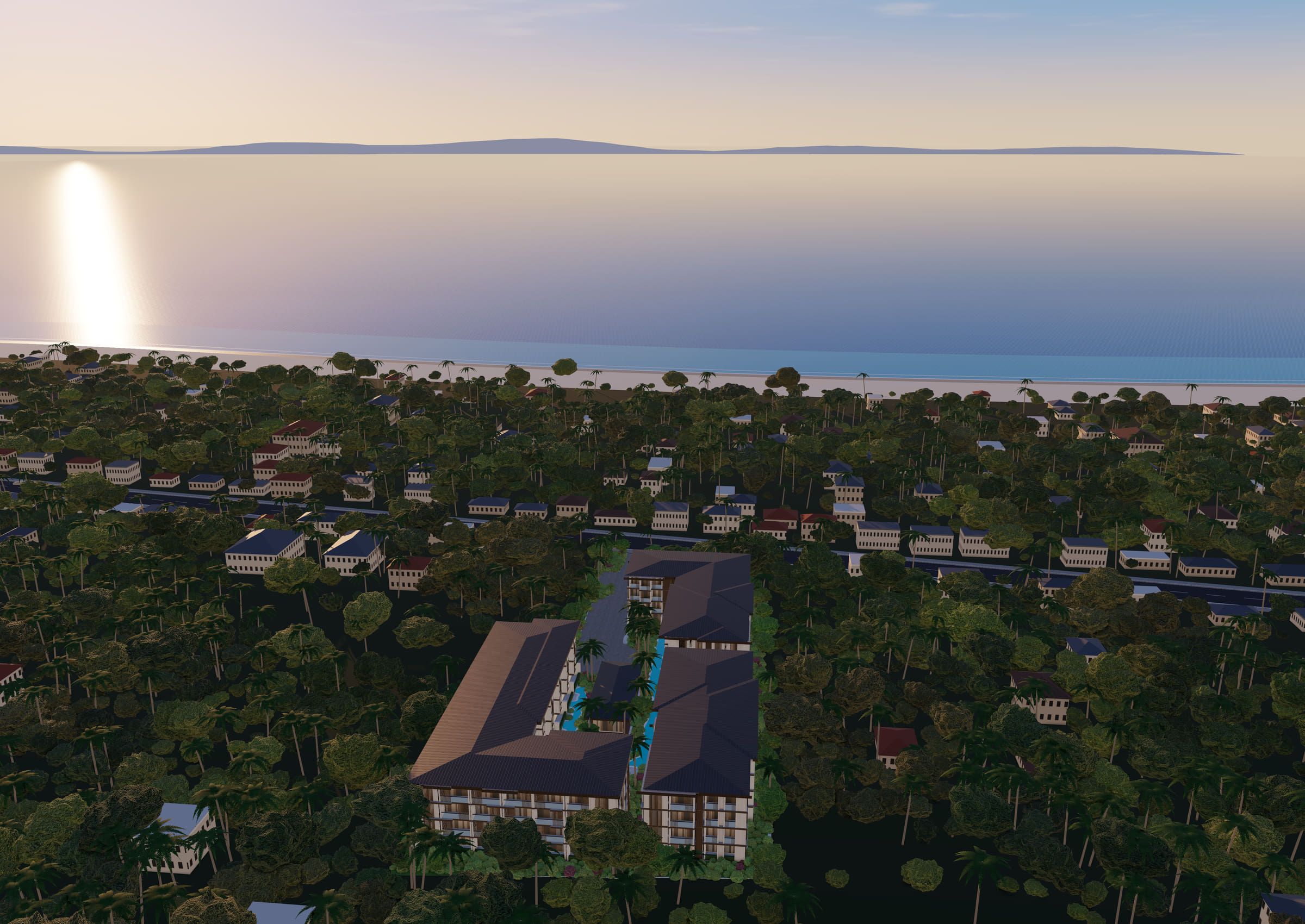

Choose your apartment in 3D
Open the 3D model of the development, pick a building and a floor, and see where each apartment sits and which way it faces.